
Securing the load
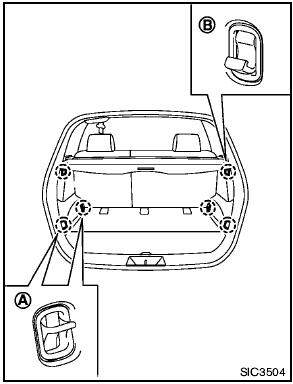
There are tie down hooks located in the cargo area as shown. The tie down hooks can be used to secure cargo with ropes or other types of straps.
Do not apply a total load of more than 22 lb. (98 N) to a single hook A or 7 lb. (31 N) to a single hook B (if so equipped) when securing cargo.

- Properly secure all cargo with ropes or straps to help prevent it from sliding or shifting. Do not place cargo higher than the seatbacks. In a sudden stop or collision, unsecured cargo could cause personal injury.
- The child restraint top tether strap may be damaged by contact with items in the cargo area. Secure any items in the cargo area. Your child could be seriously injured or killed in a collision if the top tether strap is damaged.
- Do not load your vehicle any heavier than the GVWR or the maximum front and rear GAWRs. If you do, parts of your vehicle can break, tire damage could occur, or it can change the way your vehicle handles.
This could result in loss of control and cause personal injury.
See also:
Three-point type seat belt with retractor
● Every person who drives or rides in this
vehicle should use a seat belt at all
times.
● Do not ride in a moving vehicle when
the seatback is reclined. This can be
dangerous. T ...
Instrument brightness control
The instrument cluster illuminates when the ignition
switch is placed in the ON position.
The instrument brightness control operates when
the headlight control switch is in the
AUTO or
positi ...
Charge warning light
If this light comes on while the engine is running,
it may indicate the charging system is not functioning
properly. Turn the engine off and check
the generator belt. If the belt is loose, broken ...