
Seats
Seats

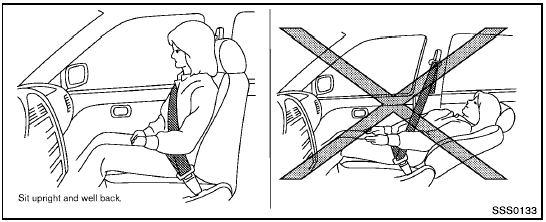
- Do not ride in a moving vehicle when the seatback is reclined. This can be dangerous. The shoulder belt will not be against your body. In an accident, you could be thrown into it and receive neck or other serious injuries. You could also slide under the lap belt and receive serious internal injuries.
- For the most effective protection when the vehicle is in motion, the seat should be upright. Always sit well back in the seat with both feet on the floor and adjust the seat properly. See “Precautions on seat belt usage” later in this section.
- After adjustment, gently rock in the seat to make sure it is securely locked.
- Do not leave children unattended inside the vehicle. They could unknowingly activate switches or controls.
Unattended children could become involved in serious accidents.
- The seatback should not be reclined any more than needed for comfort.
Seat belts are most effective when the passenger sits well back and straight up in the seat. If the seatback is reclined, the risk of sliding under the lap belt and being injured is increased.

When adjusting the seat positions, be sure not to contact any moving parts to avoid possible injuries and/or damages.
See also:
Waxing
Regular waxing protects the paint surface and
helps retain new vehicle appearance. Polishing is
recommended to remove built-up wax residue
and to avoid a weathered appearance before
re-applyin ...
Speaker Adaptation function
The Voice Recognition system has a function to
learn the users voice for better voice recognition
performance. The system can memorize the
voices of up to three persons.
Having the system lea ...
Interior
Seven-passenger seating includes split, folding second- and third-row seats.
The front passenger seat also folds. The second-row seat is split 40/20/40 and
has a one-touch release lever for third- ...