
Adjustable headrest (if so equipped)
WARNING:
The adjustable headrests supplement the other vehicle safety systems. They may provide additional protection against injury in certain rear end collisions. Adjust the headrests properly, as specified in this section. Check the adjustment after someone else uses the seat. Do not attach anything to the adjustable headrest stalks or remove the adjustable headrests. Do not use the seat if the adjustable headrests have been removed. If the headrest was removed, reinstall and properly adjust the headrest before an occupant uses the seating position. Failure to follow these instructions can reduce the effectiveness of the adjustable headrests. This may increase the risk of serious injury or death in a collision.
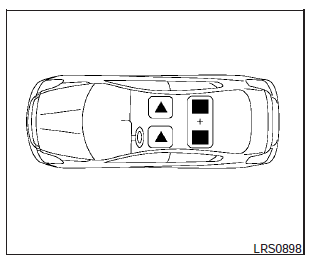
The illustration shows the seating positions equipped with adjustable headrests. All of the headrests are adjustable.
n Indicates the seating position is equipped with an adjustable headrest.
+ Indicates the seating position is not equipped with a head restraint or adjustable headrest.
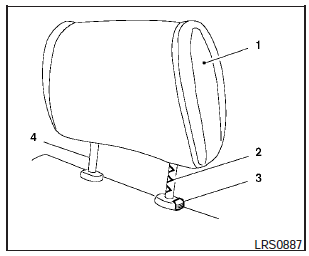
Components
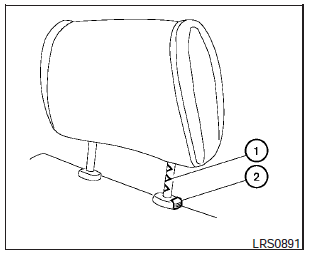
1. Adjustable headrest.
2. Adjustment notches.
3. Lock knob.
4. Stalks.
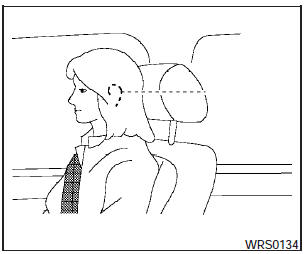
Adjustment
Adjust the headrest so the center is level with the center of the seat occupants ears.
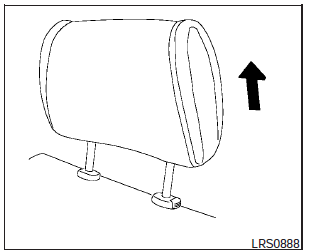
To raise the headrest, pull it up.
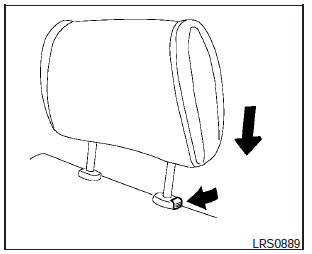
To lower, push and hold the lock knob and push the headrest down.
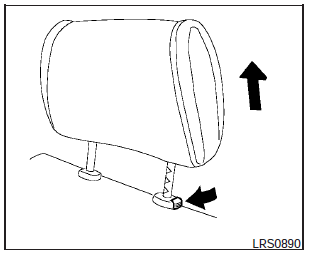
Removal
Use the following procedure to remove the adjustable headrests.
1. Pull the headrest up to the highest position.
2. Push and hold the lock knob.
3. Remove the headrest from the seat.
4. Store the headrest properly so it is not loose in the vehicle.
5. Install and properly adjust the headrest before an occupant uses the seating position.
Install
1. Align the headrest stalks with the holes in the seat. Make sure the headrest is facing the correct direction. The stalk with the adjustment notchess must be installed in the hole with the lock buttons .
2. Push and hold the lock knob and push the headrest down.
3. Properly adjust the headrest before an occupant uses the seating position.
See also:
How to use the back button
Press the BACK button to return to the
previous screen. ...
Checking bulbs
With all doors closed, apply the parking brake
and place the ignition switch in the ON position
without starting the engine. The following lights
will come on:
If equipped, the following li ...
“Call”
(Speak name) A
If you have stored entries in the phonebook, you
can dial a number associated with a name and
location.
See “Phonebook” in this section to learn how to
store entries.
When p ...