
Tire and loading information label
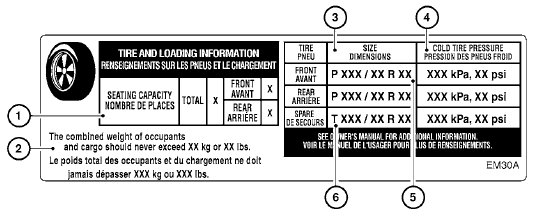
Tire and loading information label
1 Seating capacity: The maximum number of occupants that can be seated in the vehicle.
2 Vehicle load limit: See “Vehicle loading information” in the “Technical and consumer information” section.
3 Original tire size: The size of the tires originally installed on the vehicle at the factory.
4 Cold tire pressure: Inflate the tires to this pressure when the tires are cold. Tires are considered COLD after the vehicle has been parked for 3 or more hours, or driven less than 1 mile (1.6 km) at moderate speeds. The recommended cold tire inflation is set by the manufacturer to provide the best balance of tire wear, vehicle handling, driveability, tire noise, etc., up to the vehicle’s GVWR.
5 Tire size – refer to “Tire labeling” later in this section.
6 Spare tire size.
See also:
Grocery hooks
The grocery hooks are located in the trunk and
can be used to hang a standard size plastic
grocery bag.
CAUTION
Do not apply a total load of more than 20
lbs (9 kg) to a single grocery hook. ...
Underbody
In areas where road salt is used in winter, the
underbody must be cleaned regularly. This will
prevent dirt and salt from building up and
causing the acceleration of corrosion on the
underbody ...
Daytime running light system (Canada only)
The headlights automatically illuminate at a reduced
intensity when the engine is started with
the parking brake released. The daytime running
lights operate with the headlight switch in the
OFF p ...