



Nissan Versa: Appearance and care - Cleaning exterior
In order to properly maintain the pristine appearance and structural integrity of your Nissan Versa, it is essential to take consistent and proper care of its exterior surfaces.
To protect the automotive paint surfaces from permanent blemishes, wash your Nissan Versa as soon as you can under the following conditions:
- After a heavy rainfall to prevent possible chemical damage from acidic precipitation and acid rain.
- After driving extensively on coastal roads where airborne salt and moisture can accelerate corrosion.
- When environmental contaminants such as industrial soot, bird droppings, sticky tree sap, microscopic metal particles, or splattered bugs accumulate on the paint finish.
- When heavy dust, grime, or dried mud builds up across the exterior body panels.
Whenever possible, store or park your Nissan Versa inside a secure garage or beneath a fully covered area to shield it from harsh weather.
When it is necessary to park your vehicle outside, choose a shaded parking spot or protect the exterior finish using a quality breathable body cover.
Be extremely careful not to scratch the sensitive paint surface when putting on or removing the protective body cover.
Washing
Wash loose dirt and debris off the body using a wet sponge and plenty of water. Clean your Nissan Versa thoroughly using a mild automotive soap, a specialized vehicle shampoo, or a general-purpose dishwashing liquid mixed exclusively with clean, lukewarm (never hot) water.
CAUTION
- Do not concentrate a high-pressure water spray directly onto the sonar sensors (if so equipped) located on the bumper, as this will result in permanent internal damage to the sensors. Do not use pressure washers capable of spraying water exceeding 1,200 psi (8,274 kPa) to wash your vehicle. The use of high-pressure washers over 1,200 psi (8,274 kPa) can result in physical damage to or complete removal of the paint finish or body graphics. Avoid using a pressure washer closer than 12 inches (30 cm) to the vehicle body. Always utilize a wide-angle spray nozzle exclusively, keep the nozzle moving continuously, and never concentrate the water stream on any single localized area.
- Do not use commercial car washes that utilize harsh acids in their detergent formulas. Some automated car washes, particularly touchless or brushless facilities, employ aggressive acids for cleaning. These acids can react chemically with sensitive plastic vehicle components, causing them to crack and degrade. This deterioration can severely affect their appearance and cause them to malfunction. Always verify with your car wash operator to confirm that acid-free detergents are used.
- Do not wash your Nissan Versa using harsh household soaps, strong chemical detergents, gasoline, or paint solvents.
- Do not wash the vehicle under direct sunlight or while the exterior body sheet metal is hot, as the soap and water will dry too quickly and leave permanent water spots.
- Avoid using tight-napped, abrasive, or rough cloths, such as coarse washing mitts. Extra care must be exercised when removing caked-on mud or stubborn foreign substances to ensure the clear coat paint surface is not scratched or damaged.
Rinse the entire vehicle thoroughly with an abundance of clean water to wash away all soap residue.
The inside edges, overlapping seams, and hidden folds on the doors, rear hatches, and engine hood are particularly vulnerable to the corrosive effects of road salt. Therefore, these critical areas must be washed and inspected regularly.
Take care to ensure that the small drain holes located along the lower inner edge of the doors remain unobstructed and open. Spray clean water underneath the body structure and inside the wheel wells to loosen caked dirt and wash away accumulated road salt.
A clean, damp chamois leather cloth can be used to dry the exterior of your Nissan Versa smoothly to avoid unsightly water spots.
Waxing
Regular waxing creates a protective barrier over the paint surface and helps your Nissan Versa retain its showroom-new appearance.
Periodic polishing is strongly recommended to strip away built-up old wax residue and prevent a dull, weathered appearance before applying a fresh layer of protective wax.
An authorized NISSAN dealer can assist you in selecting the proper car care and waxing products.
- Apply wax to your vehicle only after completing a thorough wash and dry cycle. Carefully follow the specific application instructions supplied with the wax product.
- Do not use any wax containing harsh abrasives, heavy cutting compounds, or aggressive chemical cleaners that may wear down or damage the vehicle finish.
Machine compounding or aggressive rotary polishing performed on a modern base coat and clear coat paint finish can dull the gloss or leave permanent swirl marks.
Removing spots
Promptly remove stubborn tar and oil spots, industrial fallout dust, smashed insects, and sticky tree sap from the exterior paint surface as quickly as possible to avoid permanent staining or lasting damage. Special cleaning formulations and removal products are available at any NISSAN dealer or automotive accessory retailer. It is recommended that you visit an authorized NISSAN dealer to acquire these approved products.
Underbody
In geographical regions where road salt and chemical melting agents are heavily used during winter months, it is vital to clean the underbody of your Nissan Versa regularly to prevent dirt and salt accumulation from accelerating rust and corrosion on the chassis frame and suspension components.
Prior to the onset of the winter season and once again during the spring thaw, the protective underseal coating must be thoroughly inspected and, if necessary, professionally re-treated.
Glass
Preferences and maintenance steps for the glass elements are straightforward.
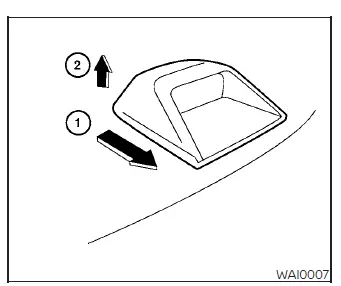
When cleaning the rear window of your Nissan Versa, the task can be made significantly easier if the high-mounted stop light assembly is detached first.
Exercise extreme caution when removing the high-mounted stop light to minimize the risk of pulling or damaging the delicate electrical wiring connected to it.
To properly remove the high-mounted stop light:
- Push the unit firmly toward the rear of the vehicle.
- Lift upward to release and remove it from its mounting slot.
The high-mounted stop light must be correctly and securely reinstalled before you drive your vehicle on public roads.
Use a quality automotive glass cleaner to remove stubborn smoke films, plastic outgassing residue, and dust buildup from all glass surfaces. It is entirely normal for automobile glass to become coated with a hazy film after the vehicle has been parked for long periods under the hot sun.
Standard glass cleaner paired with a clean, soft microfiber cloth will effortlessly dissolve and remove this film.
CAUTION
When cleaning the interior side of the windows, never utilize sharp-edged scrapers, harsh abrasive cleaners, or chlorine-based disinfectant sprays. These substances can easily scratch or sever the fragile electrical conductors, integrated radio antenna elements, or rear window defroster grid lines.
Aluminum alloy wheels
Wash the aluminum alloy wheels regularly using a soft sponge dampened in a mild soap solution, paying special attention during winter months in regions where road salt is frequently applied. If left unwashed, corrosive road salt can permanently discolor and pit the wheel finish.
CAUTION
Follow the precise directions below to avoid staining, pitting, or discoloring the alloy wheels:
- Do not use commercial wheel cleaners containing strong acid or aggressive alkali formulations to clean the wheels.
- Never apply chemical wheel cleaners to the wheels while they are hot from driving. The wheel surface temperature should match the ambient outdoor temperature.
- Rinse the wheel thoroughly with clean water to remove all traces of cleaner completely within 15 minutes after application.
Chrome parts
Clean all exterior chrome trim and brightwork regularly using a non-abrasive chrome polish to maintain a brilliant, mirror-like finish.
CAUTION
Follow the directions below to avoid staining or discoloring the delicate chrome parts:
- Do not use any cleaning agent that utilizes strong acid or alkali contents when cleaning the chrome components.
Tire dressings
NISSAN does not officially recommend the use of commercial tire dressings or shine products. Reputable tire manufacturers apply a specialized protective coating during production to help minimize natural rubber browning and discoloration. If an incompatible tire dressing is applied, it can react chemically with this factory coating and form a sticky compound.
This resulting compound may sling off the tires while driving at high speeds and cause stubborn, hard-to-remove stains on the vehicle paintwork.
If you still choose to utilize a tire dressing on your Nissan Versa, observe the following safety precautions carefully:
- Always choose a water-based tire dressing. The protective coating on the tire dissolves far less aggressively with water-based formulas than with oil-based alternatives.
- Apply only a very light coat of tire dressing to help prevent excess liquid from migrating into the tire tread patterns and deep grooves, where it becomes nearly impossible to remove.
- Wipe away any excess tire dressing thoroughly using a clean, dry cloth or towel. Verify that all residue is completely cleared from the tire tread grooves.
- Allow the tire dressing to dry completely for the full duration recommended by the dressing manufacturer before operating the vehicle.