
Parking brake
WARNING
● Be sure the parking brake is fully released before driving. Failure to do so can cause brake failure and lead to an accident.
● Do not release the parking brake from outside the vehicle.
● Do not use the shift selector in place of the parking brake. When parking, be sure the parking brake is fully engaged.
● Do not leave children unattended in a vehicle. They could release the parking brake and cause an accident.
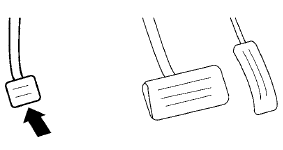
Type A
To engage: Type A, firmly depress the parking brake. Type B, pull the lever up A . To release:
1. Firmly apply the foot brake.
2. Manual transmission models:
Place the shift selector in the N (Neutral) position.
CVT models:
Move the shift selector to the P (Park) position.
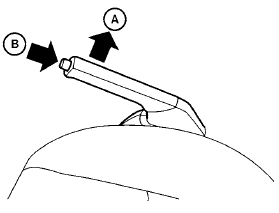
Type B
3. Type A, firmly depress the parking brake pedal and it will release. Type B, while pulling up on the parking brake lever slightly, push the button and lower completely B .
4. Before driving, be sure the brake warning light goes out.
See also:
RearView Monitor (if so equipped)
When the shift selector is shifted into the R
(Reverse) position, the monitor display shows a
rearward view from the vehicle.
● The system is designed as an aid to the
driver in detec ...
Air conditioner system refrigerant and oil recommendations
The air conditioner system in your NISSAN
vehicle must be charged with the refrigerant
HFC-134a (R-134a) and NISSAN A/C
system oil Type S or the exact equivalents.
CAUTION:
The use of any othe ...
Touch screen operation
Selecting the item:
Touch an item to select. To select the “Navigation”
key, touch the “Navigation” key 1 on the
screen. Touch the “BACK”key 2 to return to the
previous screen.
Ad ...