
Front-seat Active Head Restraints
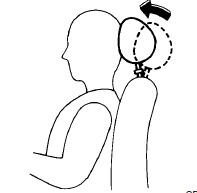
The Active Head Restraint moves forward utilizing the force that the seatback receives from the occupant in a rear-end collision. The movement of the head restraint helps support the occupant’s head by reducing its backward movement and helping absorb some of the forces that may lead to whiplash-type injuries. Active Head Restraints are effective for collisions at low to medium speeds in which it is said that whiplash injury occurs most.
Active Head Restraints operate only in certain rear-end collisions. After the collision, the head restraints return to their original position. Adjust the Active Head Restraints properly as described in this section.
See also:
Front and rear view
Guiding lines, which indicate the vehicle width
and distances to objects with reference to the
vehicle body line A , are displayed on the
monitor.
Distance guide lines:
Indicate distances from ...
2011 Nissan Murano CrossCabriolet review
There's no better way to enjoy summer driving than by slipping behind the
wheel of a convertible. For many of us with children, we're forced to watch
child-free drivers soak up all the sexy conver ...
Operating tips
-When the engine coolant temperature and
outside air temperature are low, the air flow
from the foot outlets may not operate for a
maximum of 150 seconds. However, this is
not a malfunction. ...