
Tire and loading information label
Tire and loading information label
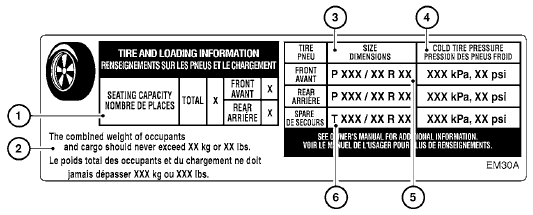
1 Seating capacity: The maximum number of occupants that can be seated in the vehicle.
2 Vehicle load limit: See “Vehicle loading information” in the “Technical and consumer information” section.
3 Original tire size: The size of the tires originally installed on the vehicle at the factory.
4 Cold tire pressure: Inflate the tires to this pressure when the tires are cold. Tires are considered COLD after the vehicle has been parked for 3 or more hours, or driven less than 1 mile (1.6 km) at moderate speeds. The recommended cold tire inflation is set by the manufacturer to provide the best balance of tire wear, vehicle handling, driveability, tire noise, etc., up to the vehicle’s GVWR.
5 Tire size – refer to “Tire labeling” later in this section.
6 Spare tire size.
See also:
Maximum load limits
Never allow the total trailer load to exceed the
value specified in the “Towing
Load/Specification” chart found later in this section.
The total trailer load equals trailer weight
plus its ...
Connecting iPod
The iPod outlet connector is located on the
center console. Your vehicle is equipped with the
specialized cable for connecting the iPod to
your vehicle audio unit. To connect the iPod , first ...
Power windows
WARNING:
- Make sure that all passengers have
their hands, etc. inside the vehicle while
it is in motion and before closing the
windows. Use the window lock switch
to prevent unexpected use o ...